






Low carbon and circular valorization of secondary materials in electric furnaces
The European steel industry is shifting from the CO₂-intensive blast furnace–basic oxygen furnace route to electrically based production. But this transition creates a critical gap: iron-rich by-products currently recycled via sinter plants and blast furnaces will need new utilization pathways once sinter plants are phased out. CircSmeltSteel directly addresses this challenge.
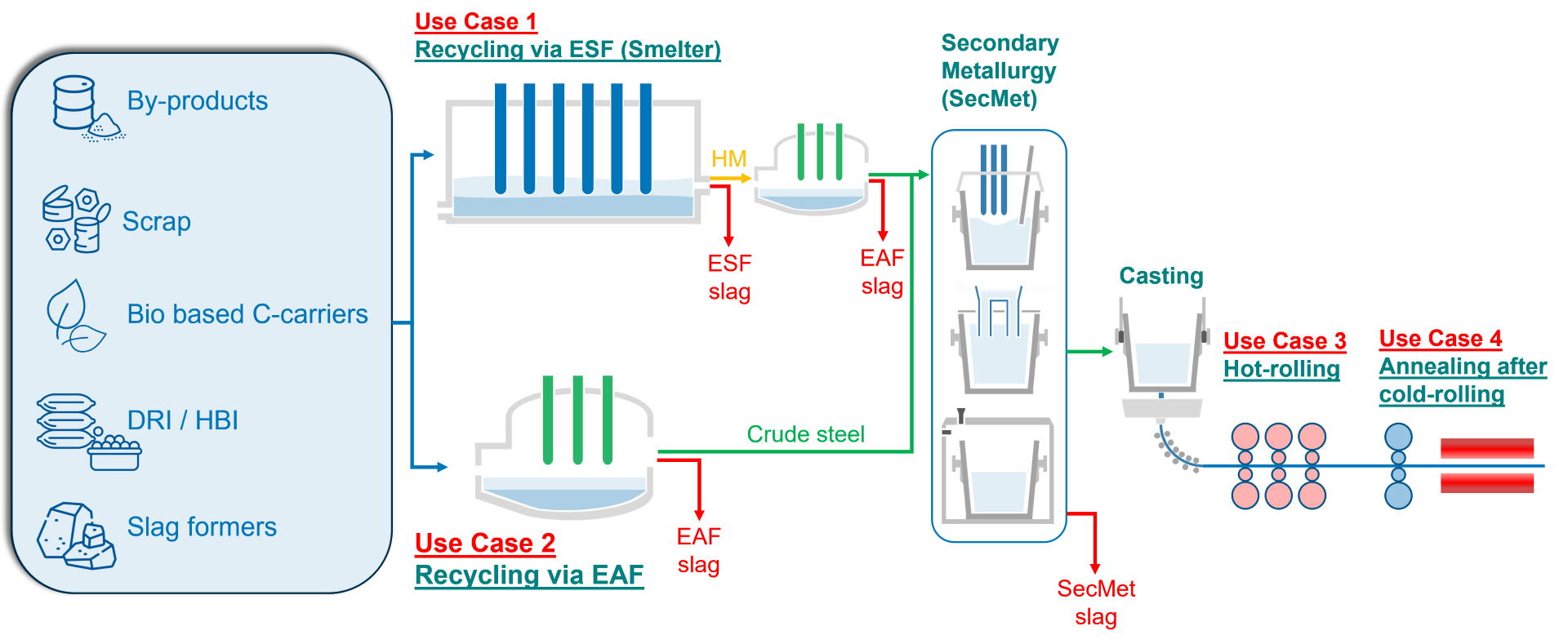
The project develops, validates and scales two low-CO₂ electric melting routes — the Electric Smelting Furnace (ESF) and the Electric Arc Furnace (EAF) — processing blast furnace dust, BOF slag, EAF dust, iron-rich process sludge and desulfurization slag, with by-product shares of up to 50% (ESF) and 20% (EAF). Its distinguishing feature is the holistic view of the entire process chain: from by-product characterization and agglomeration through melting trials, secondary metallurgy, casting and rolling to the properties of the end product — including systematic control of tramp elements such as N, P, S, Cu, Mo and Sn.
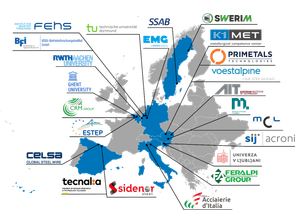
Funded under the EU’s Horizon Europe programme within the Clean Steel Partnership (Grant Agreement No. 101294187) and coordinated by K1-MET GmbH, the 26-partner consortium runs from 1 July 2026 to 30 June 2030. Life Cycle Assessment and Life Cycle Costing will quantify the environmental and economic benefits — initial estimates indicate product cost reductions of up to 15% compared to current price levels of green steel.
Objective 1
Demonstrate metallurgical by-products as secondary feedstock in ESF and EAF at pilot and industrial scale — up to 50% (ESF) and 20% (EAF).
Objective 2
Quantify the CO₂ reduction potential of electric melting with bio-based carbon carriers versus the conventional BF-BOF route.
Objective 3
Characterize the influence of tramp elements (N, P, S, Cu, Mo, Sn) on steel cleanliness, inclusions, surface quality and microstructure.
Objective 4
Validate CFD process models and data-driven ROMs for Level-2 automation, integrated into a FAIR-compliant digital platform with LCA/TEA and exploitation-ready business cases.
The process chain
Four use cases, one circular route
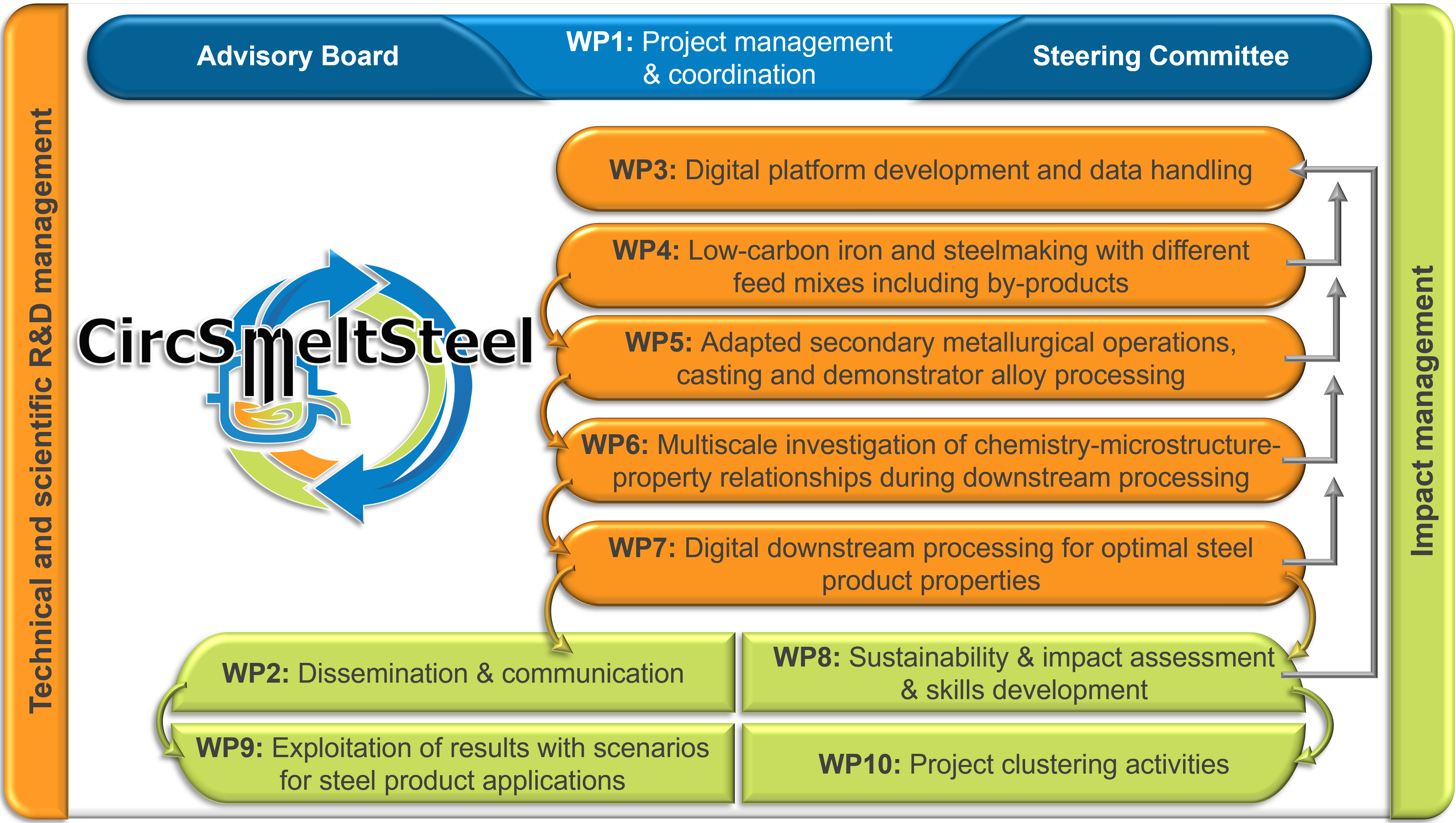
Project structure
Ten work packages, from management to exploitation
 MN Marketing Network e.U.